Buy interimmanagement.org ?
We are moving the project
interimmanagement.org .
Are you interested in purchasing the domain
interimmanagement.org ?
domain@kv-gmbh.de · 0541-91531010
Buy interimmanagement.org ?
What does media literacy mean?
Media literacy refers to the ability to access, analyze, evaluate, and create media in a variety of forms. It involves understanding how media messages are constructed, and being able to critically assess the information and ideas presented. Media literacy also includes the skills to effectively communicate through media, and to use media in a responsible and ethical manner. Overall, media literacy empowers individuals to be informed and active participants in our media-saturated society. **
Does the truth really need media literacy?
Yes, the truth does need media literacy. Media literacy helps individuals critically analyze and evaluate the information they consume, enabling them to discern between factual information and misinformation. In today's digital age, where information is easily accessible and can be easily manipulated, media literacy is essential for ensuring that the truth is not distorted or misrepresented. By being media literate, individuals can better navigate the vast amount of information available to them and make informed decisions based on accurate and reliable sources. **


Similar search terms for Literacy
Top-Angebote
Products related to Literacy:
-
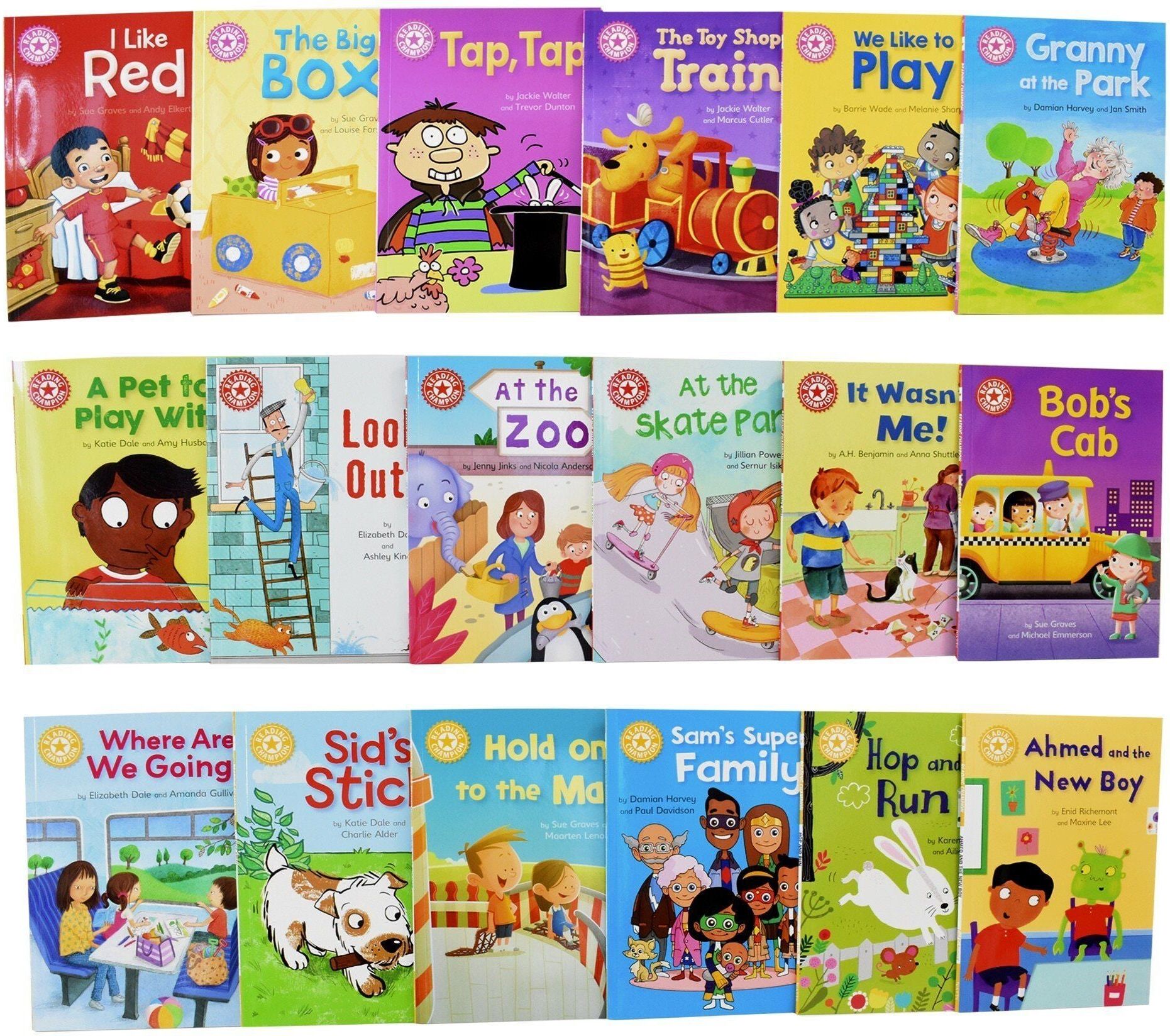
Watts Reading Champion Library for Developing Readers Collection 30 Book Set Series 1 Fun Children's Stories, Early Learning, Literacy Skills & EducationaReading Champion is an independent reading series with a fresh, modern approach. Developed in consultation with UCL Institute of Education (IOE), the books have been specifically written for independent reading and are designed to help children practise and embed their developing reading skills. support you to offer your child a wide range of books to choose from provide opportunity for your child to use and apply the reading skills they have learned in school use common interests and real-life experiences so that your child can identify with characters and settings use clear sentence structures and accessible vocabulary that your child is able to understand easily use natural language patterns so that books can be read aloud and shared with enjoyment and confidence Titles in this collection (30) Pink- I Like Red Pink-The Big Box Pink-Tap,Tap Pink-The Toy Shop Train Pink-Granny at The Park Pink-We Like To Play Red-Bob's Cab Red-It Wasn't Me Red-At The Skate Park Red-At The Zoo Red-Look Out Red- A Pet To Play With Yellow- Ahmed And the New Boy Yellow- Hop And Run Yellow-Sam's Super Family Yellow-Hold On To The Mat Yellow-Sid's Stick Yellow-Where are we going Blue-A windy day Blue-At night Blue-Flip the flamingo Blue-Merlin the mouse Blue-Stuck in the mud Blue-Fun at the beach Green-Hippo's birthday Green-The bunk bed Green-Poppy's project Green-Poor bear Green-Letters from grandpa Green-Sandeep and the dragon Use the book band that your child is reading at school to help them choose a book that is at the right level for their ability. You should decide together whether your child will read the story independently or read it aloud to you. If reading aloud then you should support your child if they hesitate or ask for help. If reading to themselves, remind your child that they can come and ask for help if they get stuck.22,89 £*Shipping: 2,99 £Secure redirect to the provider
-
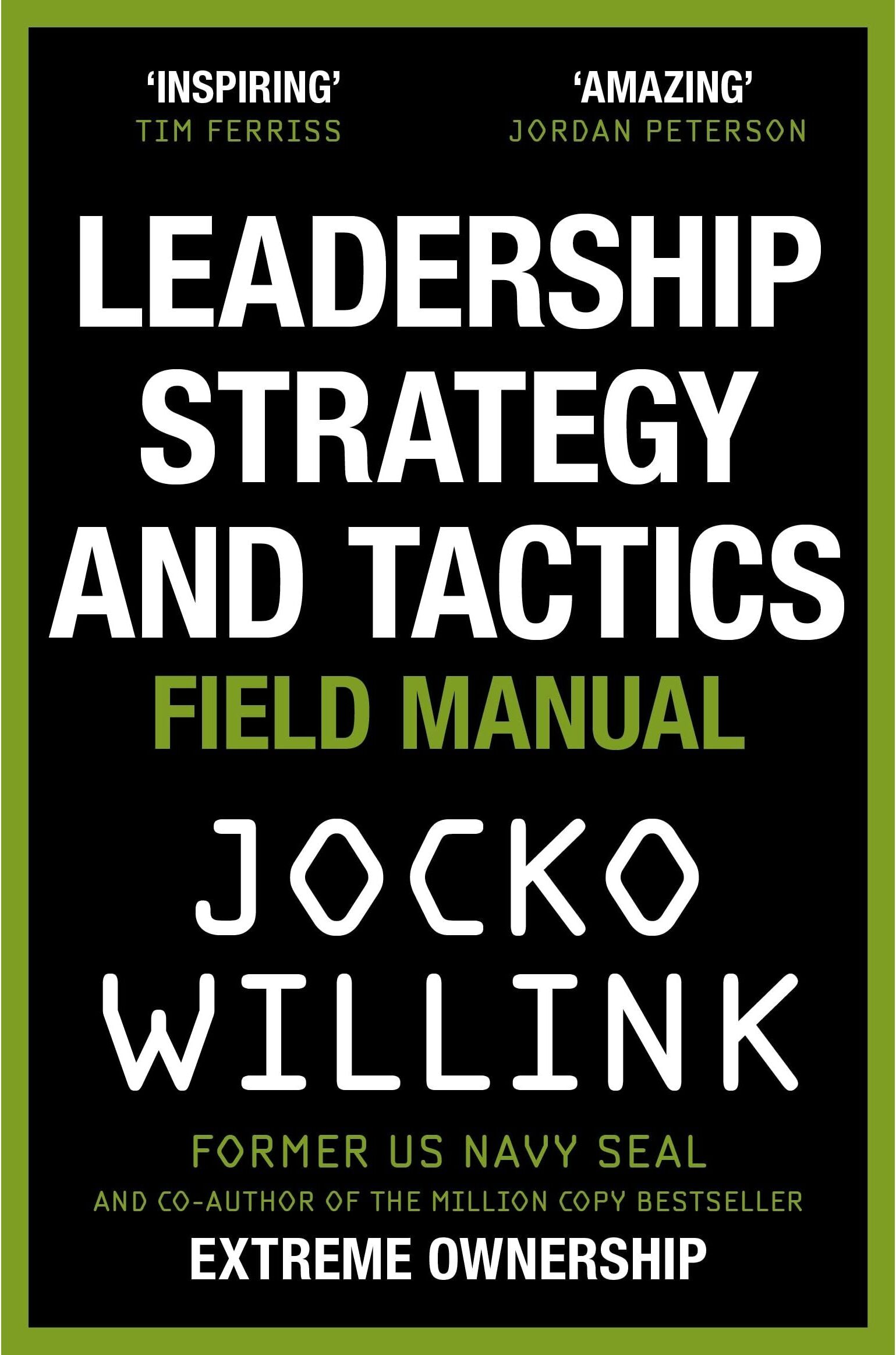
MACMILLAN Leadership Strategy and Tactics: Learn to Lead Like a Navy SEALLeadership is the most challenging of human endeavours. It is often misunderstood. It can bewilder, mystify and frustrate even the most dedicated practitioners. Leaders at all levels are often forced to use theoretical guesswork to make decisions and lead their troops. It doesn’t have to be that way. There are principles that can be applied and tenets that can be followed. There are skills that can be learned and manoeuvres that can be practised and executed. There are leadership strategies and tactics that have been tested and proven on the battlefield, in business and in life. Retired Navy SEAL Officer Jocko Willink delivers his powerful and pragmatic leadership methodology that teaches how to lead any team in any situation to victory. Here, you will learn how to: * Deal with egos and the problems they cause * Earn and build trust with both your subordinates and superiors * Instil pride in your team, without creating arrogance * Overcome challenges presented by a micromanaging, indecisive or weak boss * Create a disciplined team that regulates itself * Use leadership as a tool to teach, mentor, train and correct behaviour of team members * Operate at a maximum level of efficiency – and reap the rewards . . . and more. This book is step one towards becoming the commander of your own life. The rest is up to you.8,99 £*Shipping: 2,99 £Secure redirect to the provider
-
The Readers Paradise Enhancing Your Leadership Skills: A Practical Handbook for Success by Prof. V.K.Simon - Non Fiction Paperback - Leadership & Professional DevelopmentEnhance your leadership skills with this practical handbook by Prof. V.K.Simon. Written for anyone looking to lead with confidence and clarity, it blends self-awareness, emotional intelligence, and real-world strategy to help you achieve success. Whether you're a first-time manager or a seasoned executive, this compact guide delivers tools to strengthen decision-making, communication, and team impact in a fast-changing global workplace. It's built around the idea that great leadership is learned through practice, not theory alone, and covers the core competencies every effective leader needs, starting with self-awareness and emotional intelligence.2,99 £*Shipping: 2,99 £Secure redirect to the provider
-
Profile Books The Concise 33 Strategies of War by Robert Greene - Paperback Strategy & Leadership Book -Discover timeless strategic principles with The Concise 33 Strategies of War by Robert Greene. This condensed guide to strategic thinking draws on military history, politics, and human psychology, offering practical wisdom on conflict, negotiation, and leadership. Spanning centuries and civilizations, the book synthesizes lessons from generals, diplomats, philosophers, and captains of industry to reveal effective strategies for everyday life. Each strategy is illustrated with real historical episodes, making this a valuable companion for business leaders, students of history, and anyone seeking to improve their competitive edge. Published by Profile Books, this paperback edition is a compact and accessible guide to strategic thinking.12,49 £*Shipping: 2,99 £Secure redirect to the provider

-
What does media literacy look like in the future in light of the development of AI?
In the future, media literacy will need to incorporate an understanding of how AI is used to create and disseminate information. This will involve being able to critically evaluate the sources and credibility of AI-generated content, as well as understanding the potential biases and ethical implications of AI algorithms. Additionally, media literacy will need to include the ability to discern between human-generated and AI-generated content, and to recognize the potential for manipulation and misinformation through AI technology. Overall, media literacy in the future will require a deeper understanding of how AI is shaping the media landscape and the ability to navigate and critically analyze AI-generated content. **
-
What are the differences between mathematical literacy and mathematics?
Mathematical literacy refers to the ability to understand and use mathematics in everyday life, such as interpreting data, making decisions based on numerical information, and solving practical problems. It focuses on the application of mathematical concepts in real-world situations. On the other hand, mathematics is the academic discipline that involves the study of numbers, quantities, shapes, and patterns, and the relationships between them. It is a more formal and abstract study of mathematical concepts, often involving rigorous proofs and theoretical frameworks. While mathematical literacy emphasizes practical application, mathematics focuses on theoretical understanding and development of mathematical principles. **
-
Should media literacy not become a mandatory subject in schools?
Media literacy should become a mandatory subject in schools because it is essential for students to develop critical thinking skills and the ability to analyze and evaluate media messages. In today's digital age, students are constantly bombarded with information from various sources, and it is crucial for them to be able to discern between credible and unreliable sources. Media literacy also helps students understand the impact of media on society and their own lives, empowering them to make informed decisions. By integrating media literacy into the curriculum, schools can better prepare students to navigate the complex media landscape and become responsible, discerning consumers of information. **
-
What are the differences between basic mathematical literacy and mathematics?
Basic mathematical literacy refers to the ability to understand and use fundamental mathematical concepts and skills, such as arithmetic, basic algebra, and geometry, to solve everyday problems. It involves being able to interpret and use numbers, measurements, and basic mathematical operations in practical situations. On the other hand, mathematics encompasses a much broader and deeper understanding of mathematical concepts, theories, and principles. It involves the study of advanced topics such as calculus, statistics, and abstract algebra, and the ability to apply mathematical reasoning and problem-solving skills to complex and theoretical problems. In essence, mathematical literacy is a foundational understanding of basic mathematical concepts, while mathematics involves a more advanced and comprehensive study of the subject. **

Does anyone know good arguments for why media literacy is so important?
Media literacy is crucial in today's digital age because it helps individuals critically analyze and evaluate the information they consume. By understanding how media messages are constructed and the potential biases they may contain, people can make more informed decisions and avoid being manipulated by false or misleading content. Media literacy also empowers individuals to be active and responsible participants in society, enabling them to engage in meaningful discussions, challenge misinformation, and contribute to a more informed and democratic society. **
When can one expect measures to promote media literacy in children and adolescents?
Measures to promote media literacy in children and adolescents can be expected to be implemented in educational settings, such as schools and after-school programs. Additionally, parents and caregivers can also play a crucial role in promoting media literacy by engaging in conversations with their children about media content and teaching them critical thinking skills. Furthermore, government and non-profit organizations may also implement initiatives to promote media literacy through public awareness campaigns and policy advocacy. Overall, promoting media literacy in children and adolescents is an ongoing effort that involves collaboration between various stakeholders. **
Top-Angebote
Products related to Literacy:
-
Learning Resources Alphabet Coffee Cups - 52-Piece Set for Toddlers - Early Literacy Toy - Learning ResourcesDevelop early literacy skills with the Learning Resources Alphabet Coffee Cups. This 52-piece set includes 26 toy coffee cups and 26 matching snap-on lids, each featuring an uppercase letter on the cup and the corresponding lowercase letter on the lid. Children can match the letters together, practice recognising the alphabet, and explore beginning sounds as they play. The cups can be used for imaginative role play, such as running a pretend café or play kitchen, and can also be sorted by colour, arranged in alphabetical order, or used for group activities in early-years classrooms and nurseries. The cups and lids are made of durable plastic and can be stored in the reusable plastic bucket when not in use.16,59 £*Shipping: 3,95 £Secure redirect to the provider
-
Templar Books The Colour Monster: A Colour Activity Book by Anna Llenas - Paperback - Ages 3-7 - Emotional Literacy Colouring & Activity BookThe Colour Monster: A Colour Activity Book by Anna Llenas is a bright, hands-on companion to the internationally loved Colour Monster picture book. Designed for children aged 3-7, this 48-page paperback invites young readers to explore emotions through colouring, tracing and imaginative prompts. Following Colour Monster's mixed-up feelings, kids match colours to moods, building emotional vocabulary while having fun. This activity book is perfect for home, nursery or classroom use, making it a great tool for quiet activity time and self-expression. Colour has always been at the heart of the Colour Monster story, and this activity book brings that idea vividly to life for little hands. Across 48 colourful pages, children are asked how Colour Monster is feeling in each scene, then invited to choose the appropriate colour to match their mood. Published by Templar Books, this book is a great way to encourage children to express themselves and explore their emotions through colouring and creativity.11,99 £*Shipping: 2,99 £Secure redirect to the provider
-
Watts Reading Champion Library for Developing Readers Collection 30 Book Set Series 1 Fun Children's Stories, Early Learning, Literacy Skills & EducationaReading Champion is an independent reading series with a fresh, modern approach. Developed in consultation with UCL Institute of Education (IOE), the books have been specifically written for independent reading and are designed to help children practise and embed their developing reading skills. support you to offer your child a wide range of books to choose from provide opportunity for your child to use and apply the reading skills they have learned in school use common interests and real-life experiences so that your child can identify with characters and settings use clear sentence structures and accessible vocabulary that your child is able to understand easily use natural language patterns so that books can be read aloud and shared with enjoyment and confidence Titles in this collection (30) Pink- I Like Red Pink-The Big Box Pink-Tap,Tap Pink-The Toy Shop Train Pink-Granny at The Park Pink-We Like To Play Red-Bob's Cab Red-It Wasn't Me Red-At The Skate Park Red-At The Zoo Red-Look Out Red- A Pet To Play With Yellow- Ahmed And the New Boy Yellow- Hop And Run Yellow-Sam's Super Family Yellow-Hold On To The Mat Yellow-Sid's Stick Yellow-Where are we going Blue-A windy day Blue-At night Blue-Flip the flamingo Blue-Merlin the mouse Blue-Stuck in the mud Blue-Fun at the beach Green-Hippo's birthday Green-The bunk bed Green-Poppy's project Green-Poor bear Green-Letters from grandpa Green-Sandeep and the dragon Use the book band that your child is reading at school to help them choose a book that is at the right level for their ability. You should decide together whether your child will read the story independently or read it aloud to you. If reading aloud then you should support your child if they hesitate or ask for help. If reading to themselves, remind your child that they can come and ask for help if they get stuck.22,89 £*Shipping: 2,99 £Secure redirect to the provider
-
MACMILLAN Leadership Strategy and Tactics: Learn to Lead Like a Navy SEALLeadership is the most challenging of human endeavours. It is often misunderstood. It can bewilder, mystify and frustrate even the most dedicated practitioners. Leaders at all levels are often forced to use theoretical guesswork to make decisions and lead their troops. It doesn’t have to be that way. There are principles that can be applied and tenets that can be followed. There are skills that can be learned and manoeuvres that can be practised and executed. There are leadership strategies and tactics that have been tested and proven on the battlefield, in business and in life. Retired Navy SEAL Officer Jocko Willink delivers his powerful and pragmatic leadership methodology that teaches how to lead any team in any situation to victory. Here, you will learn how to: * Deal with egos and the problems they cause * Earn and build trust with both your subordinates and superiors * Instil pride in your team, without creating arrogance * Overcome challenges presented by a micromanaging, indecisive or weak boss * Create a disciplined team that regulates itself * Use leadership as a tool to teach, mentor, train and correct behaviour of team members * Operate at a maximum level of efficiency – and reap the rewards . . . and more. This book is step one towards becoming the commander of your own life. The rest is up to you.8,99 £*Shipping: 2,99 £Secure redirect to the provider
-
What does media literacy mean?
Media literacy refers to the ability to access, analyze, evaluate, and create media in a variety of forms. It involves understanding how media messages are constructed, and being able to critically assess the information and ideas presented. Media literacy also includes the skills to effectively communicate through media, and to use media in a responsible and ethical manner. Overall, media literacy empowers individuals to be informed and active participants in our media-saturated society. **
-
Does the truth really need media literacy?
Yes, the truth does need media literacy. Media literacy helps individuals critically analyze and evaluate the information they consume, enabling them to discern between factual information and misinformation. In today's digital age, where information is easily accessible and can be easily manipulated, media literacy is essential for ensuring that the truth is not distorted or misrepresented. By being media literate, individuals can better navigate the vast amount of information available to them and make informed decisions based on accurate and reliable sources. **
-
What does media literacy look like in the future in light of the development of AI?
In the future, media literacy will need to incorporate an understanding of how AI is used to create and disseminate information. This will involve being able to critically evaluate the sources and credibility of AI-generated content, as well as understanding the potential biases and ethical implications of AI algorithms. Additionally, media literacy will need to include the ability to discern between human-generated and AI-generated content, and to recognize the potential for manipulation and misinformation through AI technology. Overall, media literacy in the future will require a deeper understanding of how AI is shaping the media landscape and the ability to navigate and critically analyze AI-generated content. **
-
What are the differences between mathematical literacy and mathematics?
Mathematical literacy refers to the ability to understand and use mathematics in everyday life, such as interpreting data, making decisions based on numerical information, and solving practical problems. It focuses on the application of mathematical concepts in real-world situations. On the other hand, mathematics is the academic discipline that involves the study of numbers, quantities, shapes, and patterns, and the relationships between them. It is a more formal and abstract study of mathematical concepts, often involving rigorous proofs and theoretical frameworks. While mathematical literacy emphasizes practical application, mathematics focuses on theoretical understanding and development of mathematical principles. **
Similar search terms for Literacy
-
The Readers Paradise Enhancing Your Leadership Skills: A Practical Handbook for Success by Prof. V.K.Simon - Non Fiction Paperback - Leadership & Professional DevelopmentEnhance your leadership skills with this practical handbook by Prof. V.K.Simon. Written for anyone looking to lead with confidence and clarity, it blends self-awareness, emotional intelligence, and real-world strategy to help you achieve success. Whether you're a first-time manager or a seasoned executive, this compact guide delivers tools to strengthen decision-making, communication, and team impact in a fast-changing global workplace. It's built around the idea that great leadership is learned through practice, not theory alone, and covers the core competencies every effective leader needs, starting with self-awareness and emotional intelligence.2,99 £*Shipping: 2,99 £Secure redirect to the provider
-
Profile Books The Concise 33 Strategies of War by Robert Greene - Paperback Strategy & Leadership Book -Discover timeless strategic principles with The Concise 33 Strategies of War by Robert Greene. This condensed guide to strategic thinking draws on military history, politics, and human psychology, offering practical wisdom on conflict, negotiation, and leadership. Spanning centuries and civilizations, the book synthesizes lessons from generals, diplomats, philosophers, and captains of industry to reveal effective strategies for everyday life. Each strategy is illustrated with real historical episodes, making this a valuable companion for business leaders, students of history, and anyone seeking to improve their competitive edge. Published by Profile Books, this paperback edition is a compact and accessible guide to strategic thinking.12,49 £*Shipping: 2,99 £Secure redirect to the provider
-
Classic Editions The Complete Art of War – 8 Book Hardback Box Set Sun Tzu & Ancient Chinese Military Strategy Classics Leadership, Warfare & Strategy CollectionExplore centuries of strategic thinking with The Complete Art of War – 8 Books Collection Hardback Box Set, an impressive collection of classical Chinese writings on warfare, leadership, tactics and strategy. Bringing together influential works from ancient Chinese military thought, this hardback collection includes titles such as The Art of War, Methods of the Sima, Wuzi, Wei Liaozi, Three Strategies of Huang Shigong, and Six Secret Teachings of Taigong, alongside additional works included in the eight-volume set. These enduring texts examine subjects including leadership, planning, discipline, intelligence, diplomacy, battlefield tactics and strategic decision-making. Although written in the context of ancient warfare, many of their principles have subsequently attracted readers interested in history, leadership and strategic thinking. Presented as an 8-volume hardback boxed collection, the set is ideal for readers of military history, students of classical philosophy and collectors of beautifully presented classic works. Why Readers Will Love This Collection Includes 8 hardback volumes in a collectible box set Features influential works of ancient Chinese military strategy Explores strategy, leadership, tactics and decision-making Excellent addition to military history and philosophy collections Attractive hardback format for a home or study library Ideal gift for history, strategy and classic literature enthusiasts The Complete Art of War 8 Book Collection brings together some of history's most enduring works on strategy in one impressive hardback set. Titles In This Set: Notebook Questions and Replies Three Strategies of Huang Shigong Wuzi Wei Liaozi The Methods of The Sima Six Secret Teachings of Taigong The Art of War16,99 £*Shipping: 2,99 £Secure redirect to the provider
-
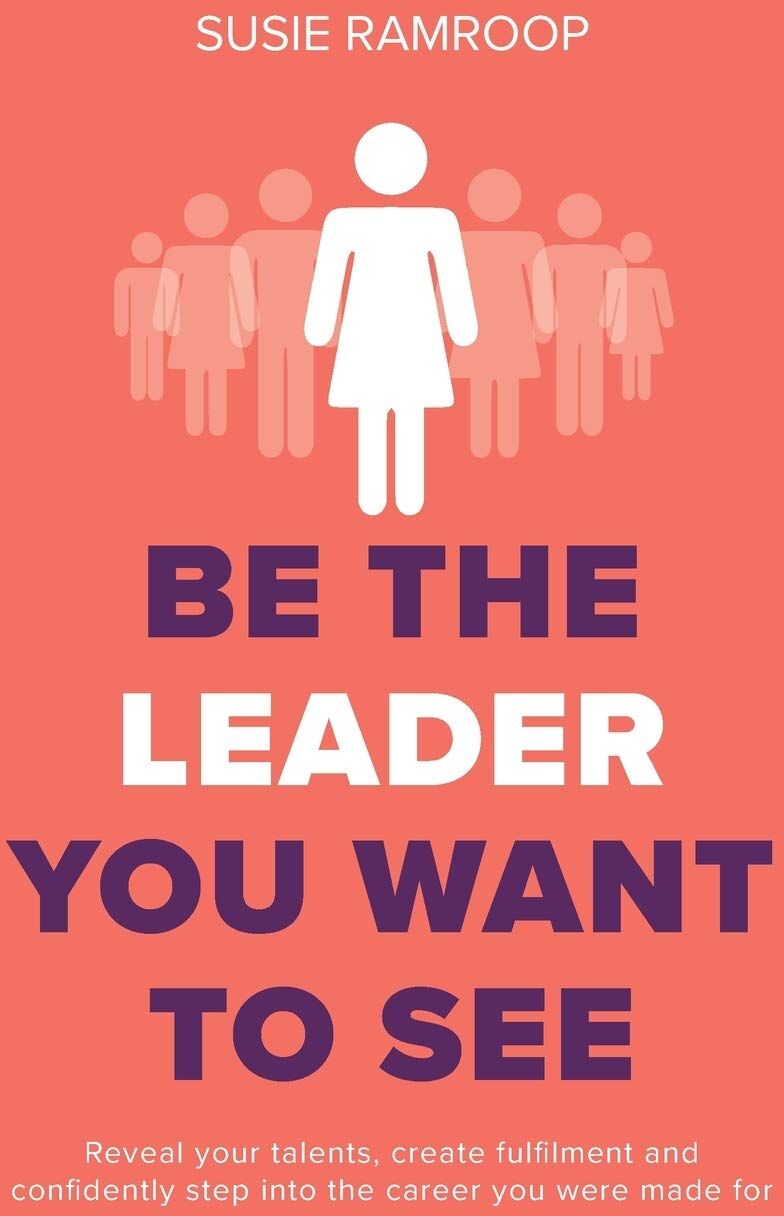
Rethink Press Be the Leader You Want to See by Susie Ramroop - Paperback Leadership & Career Development Book for Ambitious ProfessionalsBe the Leader You Want to See is a leadership guide by career coach Susie Ramroop, written for ambitious professionals. This brand-new paperback helps you unlock the talent you already possess and present it to the world with confidence. The book is structured around three transformative stages: Awareness, Bravery, and Contribution. In Awareness, you break free from the search for fulfillment and quieten the inner impostor that has kept you playing small. In Bravery, you learn to step up and take on new challenges. The book is a concise and purpose-driven guide that turns good intentions into tangible career progress for managers, aspiring leaders, and mentors alike. Susie Ramroop guides readers through the three stages, helping them to become the leaders they want to see.4,99 £*Shipping: 2,99 £Secure redirect to the provider
-
Should media literacy not become a mandatory subject in schools?
Media literacy should become a mandatory subject in schools because it is essential for students to develop critical thinking skills and the ability to analyze and evaluate media messages. In today's digital age, students are constantly bombarded with information from various sources, and it is crucial for them to be able to discern between credible and unreliable sources. Media literacy also helps students understand the impact of media on society and their own lives, empowering them to make informed decisions. By integrating media literacy into the curriculum, schools can better prepare students to navigate the complex media landscape and become responsible, discerning consumers of information. **
-
What are the differences between basic mathematical literacy and mathematics?
Basic mathematical literacy refers to the ability to understand and use fundamental mathematical concepts and skills, such as arithmetic, basic algebra, and geometry, to solve everyday problems. It involves being able to interpret and use numbers, measurements, and basic mathematical operations in practical situations. On the other hand, mathematics encompasses a much broader and deeper understanding of mathematical concepts, theories, and principles. It involves the study of advanced topics such as calculus, statistics, and abstract algebra, and the ability to apply mathematical reasoning and problem-solving skills to complex and theoretical problems. In essence, mathematical literacy is a foundational understanding of basic mathematical concepts, while mathematics involves a more advanced and comprehensive study of the subject. **
-
Does anyone know good arguments for why media literacy is so important?
Media literacy is crucial in today's digital age because it helps individuals critically analyze and evaluate the information they consume. By understanding how media messages are constructed and the potential biases they may contain, people can make more informed decisions and avoid being manipulated by false or misleading content. Media literacy also empowers individuals to be active and responsible participants in society, enabling them to engage in meaningful discussions, challenge misinformation, and contribute to a more informed and democratic society. **
-
When can one expect measures to promote media literacy in children and adolescents?
Measures to promote media literacy in children and adolescents can be expected to be implemented in educational settings, such as schools and after-school programs. Additionally, parents and caregivers can also play a crucial role in promoting media literacy by engaging in conversations with their children about media content and teaching them critical thinking skills. Furthermore, government and non-profit organizations may also implement initiatives to promote media literacy through public awareness campaigns and policy advocacy. Overall, promoting media literacy in children and adolescents is an ongoing effort that involves collaboration between various stakeholders. **
* All prices are inclusive of VAT and, if applicable, plus shipping costs. The offer information is based on the details provided by the respective shop and is updated through automated processes. Real-time updates do not occur, so deviations can occur in individual cases. ** Note: Parts of this content were created by AI.