Buy interimmanagement.org ?
We are moving the project
interimmanagement.org .
Are you interested in purchasing the domain
interimmanagement.org ?
domain@kv-gmbh.de · 0541-91531010
Buy interimmanagement.org ?
What is the correct solution for the task on left inverse, right inverse, and inverse mapping?
The correct solution for the task on left inverse, right inverse, and inverse mapping is as follows: 1. Left Inverse: A left inverse of a function f is a function g such that g(f(x)) = x for all x in the domain of f. To find the left inverse, we need to solve for g in the equation g(f(x)) = x. 2. Right Inverse: A right inverse of a function f is a function h such that f(h(x)) = x for all x in the domain of h. To find the right inverse, we need to solve for h in the equation f(h(x)) = x. 3. Inverse Mapping: The inverse mapping of a function f is a function f^-1 such that f(f^-1(x)) = x for all x in the domain of f and f^-1(f(x)) = x for all x in the domain of f^-1. To find the inverse mapping, we need to solve for **
What are inverse values?
Inverse values are pairs of numbers that, when multiplied together, equal 1. For example, the inverse of 2 is 1/2, as 2 * 1/2 = 1. Inverse values are important in mathematics, especially in operations like division, where multiplying by the inverse is equivalent to dividing. Inverse values are also used in trigonometry, where the reciprocal of a trigonometric function is its inverse. **


Similar search terms for Inverse
Top-Angebote
Products related to Inverse:
-
Dermagius Age Inverse Neck and Décolleté Anti-Aging Cream Gel 60mLA skin-care product for wrinkles and signs of ageing. Elevate your skincare routine with Age Inverse Neck and Décolleté Cream Gel. Firm, hydrate, and rejuvenate the delicate neck and chest areas. Firming and lifting: Improves skin elasticity and reduces sagging with a tightening effect. Wrinkle reduction: Smooths fine lines and diminishes wrinkle depth.33,87 £*Shipping: 5,16 £Secure redirect to the provider
-
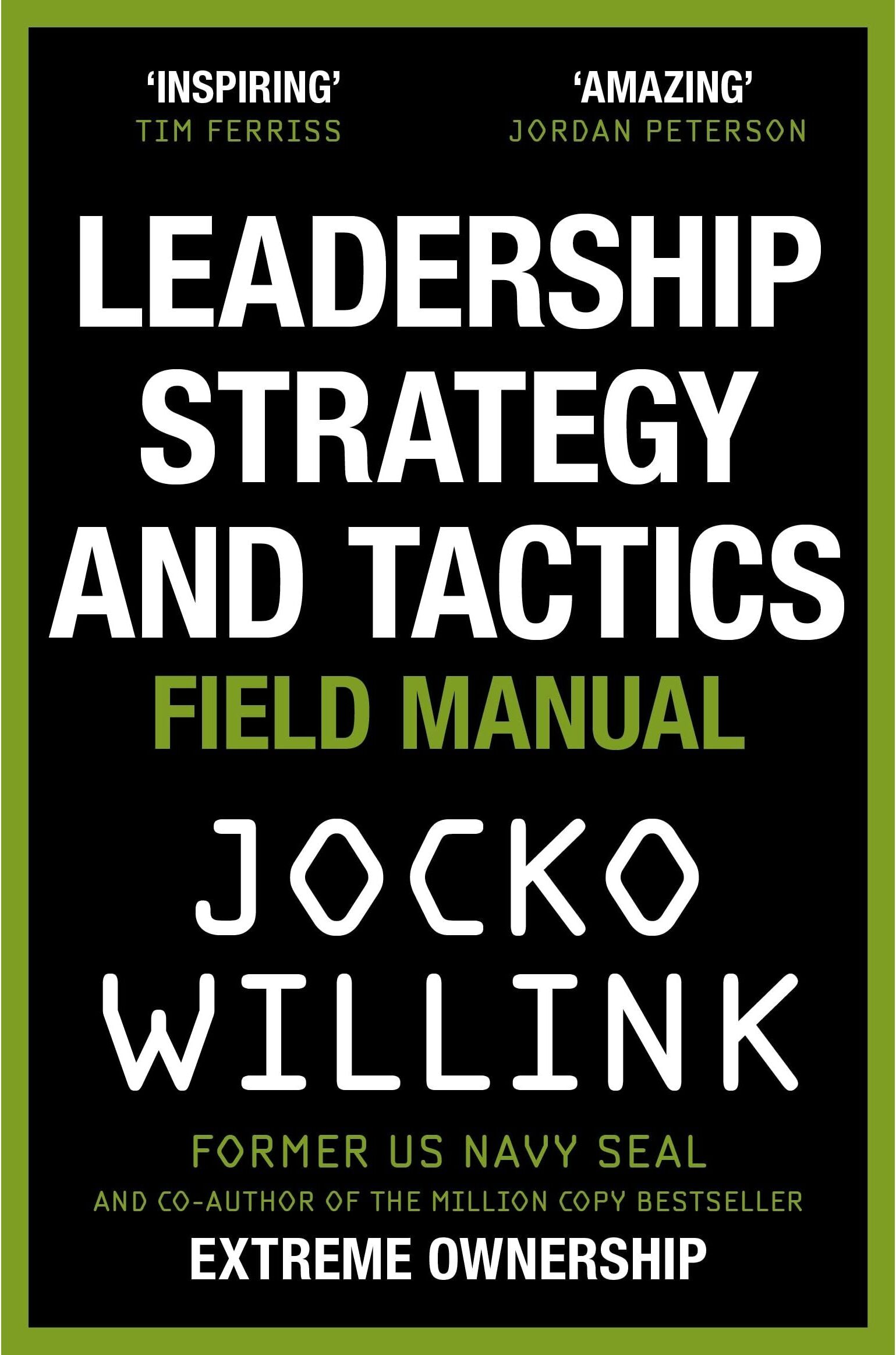
MACMILLAN Leadership Strategy and Tactics: Learn to Lead Like a Navy SEALLeadership is the most challenging of human endeavours. It is often misunderstood. It can bewilder, mystify and frustrate even the most dedicated practitioners. Leaders at all levels are often forced to use theoretical guesswork to make decisions and lead their troops. It doesn’t have to be that way. There are principles that can be applied and tenets that can be followed. There are skills that can be learned and manoeuvres that can be practised and executed. There are leadership strategies and tactics that have been tested and proven on the battlefield, in business and in life. Retired Navy SEAL Officer Jocko Willink delivers his powerful and pragmatic leadership methodology that teaches how to lead any team in any situation to victory. Here, you will learn how to: * Deal with egos and the problems they cause * Earn and build trust with both your subordinates and superiors * Instil pride in your team, without creating arrogance * Overcome challenges presented by a micromanaging, indecisive or weak boss * Create a disciplined team that regulates itself * Use leadership as a tool to teach, mentor, train and correct behaviour of team members * Operate at a maximum level of efficiency – and reap the rewards . . . and more. This book is step one towards becoming the commander of your own life. The rest is up to you.8,99 £*Shipping: 2,99 £Secure redirect to the provider
-
The Readers Paradise Enhancing Your Leadership Skills: A Practical Handbook for Success by Prof. V.K.Simon - Non Fiction Paperback - Leadership & Professional DevelopmentEnhance your leadership skills with this practical handbook by Prof. V.K.Simon. Written for anyone looking to lead with confidence and clarity, it blends self-awareness, emotional intelligence, and real-world strategy to help you achieve success. Whether you're a first-time manager or a seasoned executive, this compact guide delivers tools to strengthen decision-making, communication, and team impact in a fast-changing global workplace. It's built around the idea that great leadership is learned through practice, not theory alone, and covers the core competencies every effective leader needs, starting with self-awareness and emotional intelligence.2,99 £*Shipping: 2,99 £Secure redirect to the provider
-
Profile Books The Concise 33 Strategies of War by Robert Greene - Paperback Strategy & Leadership Book -Discover timeless strategic principles with The Concise 33 Strategies of War by Robert Greene. This condensed guide to strategic thinking draws on military history, politics, and human psychology, offering practical wisdom on conflict, negotiation, and leadership. Spanning centuries and civilizations, the book synthesizes lessons from generals, diplomats, philosophers, and captains of industry to reveal effective strategies for everyday life. Each strategy is illustrated with real historical episodes, making this a valuable companion for business leaders, students of history, and anyone seeking to improve their competitive edge. Published by Profile Books, this paperback edition is a compact and accessible guide to strategic thinking.12,49 £*Shipping: 2,99 £Secure redirect to the provider


-
What are inverse functions?
Inverse functions are functions that "reverse" the action of another function. In other words, if a function f(x) maps an input x to an output y, then the inverse function, denoted as f^(-1)(y), maps the output y back to the original input x. Inverse functions undo the effects of the original function, allowing us to retrieve the original input from the output. It is important to note that not all functions have inverses, and for a function to have an inverse, it must be one-to-one (each input corresponds to a unique output). **
-
What is the difference between the inverse function and the inverse function?
The inverse function and the inverse of a function are related concepts but have different meanings. The inverse function of a function f is denoted as f^(-1) and it undoes the action of the original function f. It swaps the input and output values of the original function. On the other hand, the inverse of a function is the reflection of the function's graph over the line y = x. It is obtained by swapping the x and y variables in the function's equation. **
-
What is a multiplicative inverse?
A multiplicative inverse is a number that, when multiplied by a given number, results in the multiplicative identity, which is usually 1. In other words, the multiplicative inverse of a number is the reciprocal of that number. For example, the multiplicative inverse of 2 is 1/2, because 2 multiplied by 1/2 equals 1. **
-
What is the inverse probability?
Inverse probability is the probability of an event not happening. It is calculated by subtracting the probability of the event from 1. For example, if the probability of raining tomorrow is 0.3, then the inverse probability of raining tomorrow is 0.7 (1 - 0.3). Inverse probability is useful in calculating the likelihood of the complementary event occurring. **

What is an inverse function?
An inverse function is a function that "undoes" the action of another function. In other words, if a function f(x) takes an input x and produces an output y, then the inverse function f^-1(y) takes the output y and produces the original input x. The inverse function essentially reverses the process of the original function. It is denoted as f^-1(x) and is only defined for functions that are one-to-one, meaning that each input has a unique output. **
What is an inverse relation?
An inverse relation is a relationship between two variables where as one variable increases, the other variable decreases at a consistent rate. In other words, when one variable goes up, the other goes down, and vice versa. This can be represented graphically as a curve that is symmetrical across the line y=x. In mathematics, an inverse relation is often represented by the equation y = 1/x, where x and y are the variables involved in the relationship. **
Top-Angebote
Products related to Inverse:
-
Dermagius Age Inverse Eyes Gel Cream Concentrated 15mLA skin-care product for wrinkles and signs of ageing. Look younger, brighter, and more revitalized—effortlessly. Immediate lifting effect with intense hydration and luminosity. Improves skin firmness, elasticity, and texture. Visibly reduces wrinkles and fine lines. Boosts collagen and elastin production.32,67 £*Shipping: 4,07 £Secure redirect to the provider
-
Dermagius Age Inverse Firm and Lift Gel Cream ConcentratedA skin-care product for wrinkles and signs of ageing. Lifting Effect: Instantly remodels and lifts facial contours. Wrinkle Reduction: Smooths fine lines and prevents new wrinkles from forming. Enhanced Firmness: Boosts collagen and elastin for a firmer, more elastic skin texture. Deep Hydration: Squalane and Vitamin E lock in moisture and protect against environmental damage.41,38 £*Shipping: 9,68 £Secure redirect to the provider
-
Dermagius Age Inverse Neck and Décolleté Anti-Aging Cream Gel 60mLA skin-care product for wrinkles and signs of ageing. Elevate your skincare routine with Age Inverse Neck and Décolleté Cream Gel. Firm, hydrate, and rejuvenate the delicate neck and chest areas. Firming and lifting: Improves skin elasticity and reduces sagging with a tightening effect. Wrinkle reduction: Smooths fine lines and diminishes wrinkle depth.33,87 £*Shipping: 5,16 £Secure redirect to the provider
-
MACMILLAN Leadership Strategy and Tactics: Learn to Lead Like a Navy SEALLeadership is the most challenging of human endeavours. It is often misunderstood. It can bewilder, mystify and frustrate even the most dedicated practitioners. Leaders at all levels are often forced to use theoretical guesswork to make decisions and lead their troops. It doesn’t have to be that way. There are principles that can be applied and tenets that can be followed. There are skills that can be learned and manoeuvres that can be practised and executed. There are leadership strategies and tactics that have been tested and proven on the battlefield, in business and in life. Retired Navy SEAL Officer Jocko Willink delivers his powerful and pragmatic leadership methodology that teaches how to lead any team in any situation to victory. Here, you will learn how to: * Deal with egos and the problems they cause * Earn and build trust with both your subordinates and superiors * Instil pride in your team, without creating arrogance * Overcome challenges presented by a micromanaging, indecisive or weak boss * Create a disciplined team that regulates itself * Use leadership as a tool to teach, mentor, train and correct behaviour of team members * Operate at a maximum level of efficiency – and reap the rewards . . . and more. This book is step one towards becoming the commander of your own life. The rest is up to you.8,99 £*Shipping: 2,99 £Secure redirect to the provider
-
What is the correct solution for the task on left inverse, right inverse, and inverse mapping?
The correct solution for the task on left inverse, right inverse, and inverse mapping is as follows: 1. Left Inverse: A left inverse of a function f is a function g such that g(f(x)) = x for all x in the domain of f. To find the left inverse, we need to solve for g in the equation g(f(x)) = x. 2. Right Inverse: A right inverse of a function f is a function h such that f(h(x)) = x for all x in the domain of h. To find the right inverse, we need to solve for h in the equation f(h(x)) = x. 3. Inverse Mapping: The inverse mapping of a function f is a function f^-1 such that f(f^-1(x)) = x for all x in the domain of f and f^-1(f(x)) = x for all x in the domain of f^-1. To find the inverse mapping, we need to solve for **
-
What are inverse values?
Inverse values are pairs of numbers that, when multiplied together, equal 1. For example, the inverse of 2 is 1/2, as 2 * 1/2 = 1. Inverse values are important in mathematics, especially in operations like division, where multiplying by the inverse is equivalent to dividing. Inverse values are also used in trigonometry, where the reciprocal of a trigonometric function is its inverse. **
-
What are inverse functions?
Inverse functions are functions that "reverse" the action of another function. In other words, if a function f(x) maps an input x to an output y, then the inverse function, denoted as f^(-1)(y), maps the output y back to the original input x. Inverse functions undo the effects of the original function, allowing us to retrieve the original input from the output. It is important to note that not all functions have inverses, and for a function to have an inverse, it must be one-to-one (each input corresponds to a unique output). **
-
What is the difference between the inverse function and the inverse function?
The inverse function and the inverse of a function are related concepts but have different meanings. The inverse function of a function f is denoted as f^(-1) and it undoes the action of the original function f. It swaps the input and output values of the original function. On the other hand, the inverse of a function is the reflection of the function's graph over the line y = x. It is obtained by swapping the x and y variables in the function's equation. **
Similar search terms for Inverse
-
The Readers Paradise Enhancing Your Leadership Skills: A Practical Handbook for Success by Prof. V.K.Simon - Non Fiction Paperback - Leadership & Professional DevelopmentEnhance your leadership skills with this practical handbook by Prof. V.K.Simon. Written for anyone looking to lead with confidence and clarity, it blends self-awareness, emotional intelligence, and real-world strategy to help you achieve success. Whether you're a first-time manager or a seasoned executive, this compact guide delivers tools to strengthen decision-making, communication, and team impact in a fast-changing global workplace. It's built around the idea that great leadership is learned through practice, not theory alone, and covers the core competencies every effective leader needs, starting with self-awareness and emotional intelligence.2,99 £*Shipping: 2,99 £Secure redirect to the provider
-
Profile Books The Concise 33 Strategies of War by Robert Greene - Paperback Strategy & Leadership Book -Discover timeless strategic principles with The Concise 33 Strategies of War by Robert Greene. This condensed guide to strategic thinking draws on military history, politics, and human psychology, offering practical wisdom on conflict, negotiation, and leadership. Spanning centuries and civilizations, the book synthesizes lessons from generals, diplomats, philosophers, and captains of industry to reveal effective strategies for everyday life. Each strategy is illustrated with real historical episodes, making this a valuable companion for business leaders, students of history, and anyone seeking to improve their competitive edge. Published by Profile Books, this paperback edition is a compact and accessible guide to strategic thinking.12,49 £*Shipping: 2,99 £Secure redirect to the provider
-
Classic Editions The Complete Art of War – 8 Book Hardback Box Set Sun Tzu & Ancient Chinese Military Strategy Classics Leadership, Warfare & Strategy CollectionExplore centuries of strategic thinking with The Complete Art of War – 8 Books Collection Hardback Box Set, an impressive collection of classical Chinese writings on warfare, leadership, tactics and strategy. Bringing together influential works from ancient Chinese military thought, this hardback collection includes titles such as The Art of War, Methods of the Sima, Wuzi, Wei Liaozi, Three Strategies of Huang Shigong, and Six Secret Teachings of Taigong, alongside additional works included in the eight-volume set. These enduring texts examine subjects including leadership, planning, discipline, intelligence, diplomacy, battlefield tactics and strategic decision-making. Although written in the context of ancient warfare, many of their principles have subsequently attracted readers interested in history, leadership and strategic thinking. Presented as an 8-volume hardback boxed collection, the set is ideal for readers of military history, students of classical philosophy and collectors of beautifully presented classic works. Why Readers Will Love This Collection Includes 8 hardback volumes in a collectible box set Features influential works of ancient Chinese military strategy Explores strategy, leadership, tactics and decision-making Excellent addition to military history and philosophy collections Attractive hardback format for a home or study library Ideal gift for history, strategy and classic literature enthusiasts The Complete Art of War 8 Book Collection brings together some of history's most enduring works on strategy in one impressive hardback set. Titles In This Set: Notebook Questions and Replies Three Strategies of Huang Shigong Wuzi Wei Liaozi The Methods of The Sima Six Secret Teachings of Taigong The Art of War16,99 £*Shipping: 2,99 £Secure redirect to the provider
-
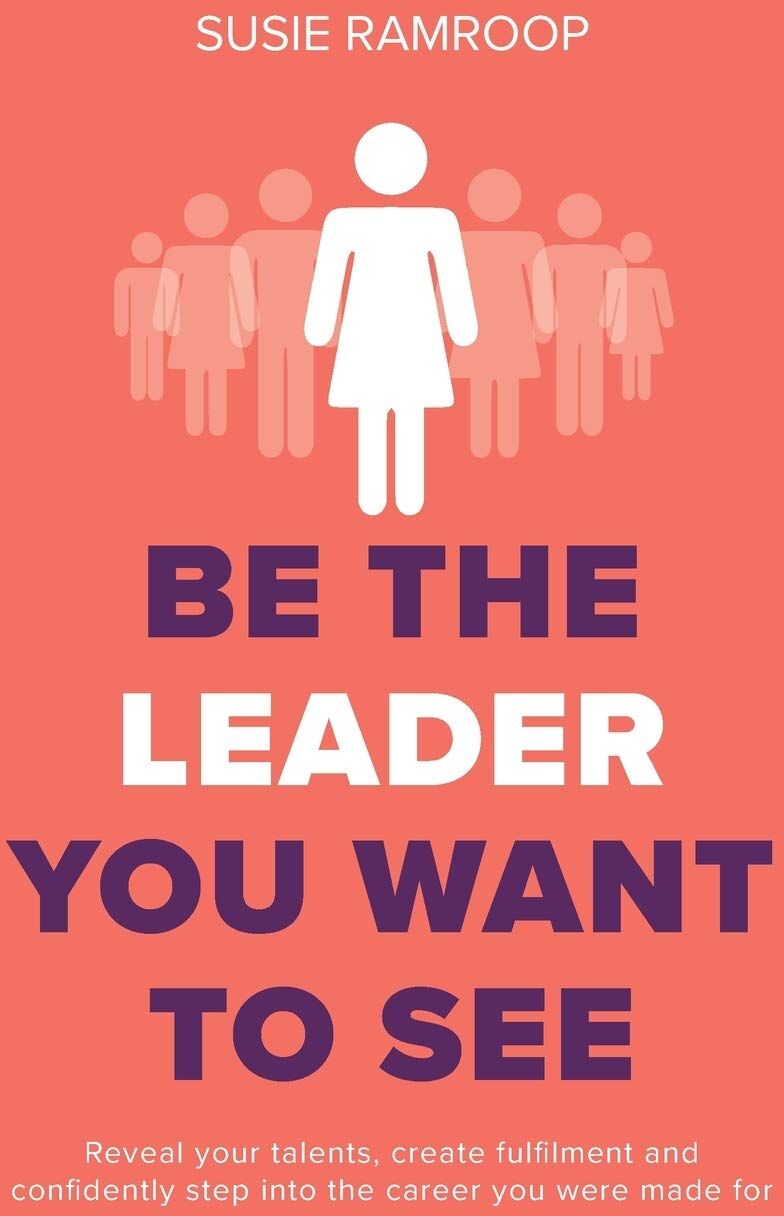
Rethink Press Be the Leader You Want to See by Susie Ramroop - Paperback Leadership & Career Development Book for Ambitious ProfessionalsBe the Leader You Want to See is a leadership guide by career coach Susie Ramroop, written for ambitious professionals. This brand-new paperback helps you unlock the talent you already possess and present it to the world with confidence. The book is structured around three transformative stages: Awareness, Bravery, and Contribution. In Awareness, you break free from the search for fulfillment and quieten the inner impostor that has kept you playing small. In Bravery, you learn to step up and take on new challenges. The book is a concise and purpose-driven guide that turns good intentions into tangible career progress for managers, aspiring leaders, and mentors alike. Susie Ramroop guides readers through the three stages, helping them to become the leaders they want to see.4,99 £*Shipping: 2,99 £Secure redirect to the provider
-
What is a multiplicative inverse?
A multiplicative inverse is a number that, when multiplied by a given number, results in the multiplicative identity, which is usually 1. In other words, the multiplicative inverse of a number is the reciprocal of that number. For example, the multiplicative inverse of 2 is 1/2, because 2 multiplied by 1/2 equals 1. **
-
What is the inverse probability?
Inverse probability is the probability of an event not happening. It is calculated by subtracting the probability of the event from 1. For example, if the probability of raining tomorrow is 0.3, then the inverse probability of raining tomorrow is 0.7 (1 - 0.3). Inverse probability is useful in calculating the likelihood of the complementary event occurring. **
-
What is an inverse function?
An inverse function is a function that "undoes" the action of another function. In other words, if a function f(x) takes an input x and produces an output y, then the inverse function f^-1(y) takes the output y and produces the original input x. The inverse function essentially reverses the process of the original function. It is denoted as f^-1(x) and is only defined for functions that are one-to-one, meaning that each input has a unique output. **
-
What is an inverse relation?
An inverse relation is a relationship between two variables where as one variable increases, the other variable decreases at a consistent rate. In other words, when one variable goes up, the other goes down, and vice versa. This can be represented graphically as a curve that is symmetrical across the line y=x. In mathematics, an inverse relation is often represented by the equation y = 1/x, where x and y are the variables involved in the relationship. **
* All prices are inclusive of VAT and, if applicable, plus shipping costs. The offer information is based on the details provided by the respective shop and is updated through automated processes. Real-time updates do not occur, so deviations can occur in individual cases. ** Note: Parts of this content were created by AI.